
On this page
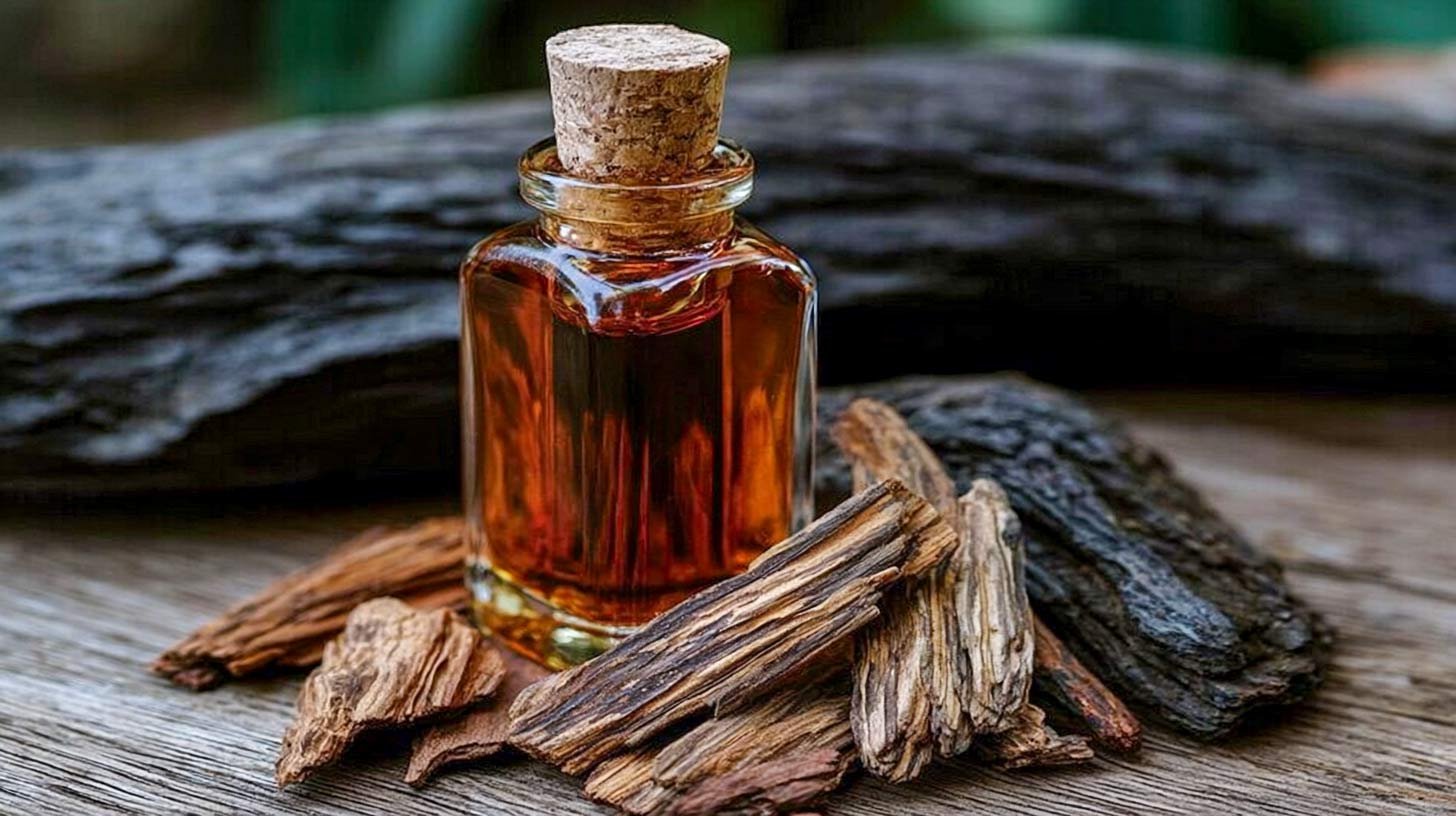
Agarwood chips are pieces of resinous wood you heat to scent a room. Oud oil is distilled from that wood and worn on skin like perfume. Chips suit a shared, ritual experience and are easier to check yourself. Oil suits a personal, portable fragrance but depends more on trusting the seller. Many enthusiasts end up owning both.
- Chips need a burner. Oil needs nothing but the bottle.
- A small amount of either goes a long way, so cost per use matters more than sticker price.
- Synthetic oil is harder to spot than fake wood.
Agarwood chips and oud oil come from the same resin-bearing wood, but once you are deciding what to buy, they behave like two different products. One is warmed and enjoyed as room fragrance. The other is distilled, concentrated and worn on the skin. Neither is the "real" version with the other a substitute. They are two ways of experiencing the same material.
| Agarwood chips | Oud oil | |
|---|---|---|
| How you use it | Warmed on a burner | Dabbed on skin |
| Experience | Room scent, shared | Personal, close to the body |
| Equipment | Burner, plus charcoal and ash or an electric heater | None |
| Portability | Best at home | Easy to carry |
| Checking it yourself | Easier: look, weigh, sink, smell | Harder without a lab |
Same source, different products
Chips are pieces of resinous wood, cleaned and often graded, that release fragrance when gently heated, as covered in how to burn agarwood chips. Oud oil is made by soaking and distilling that kind of wood, as covered in how oud oil is made. The oil captures the wood's more volatile aromatic compounds in a concentrated liquid meant for skin or perfumery rather than heating.
Because distillation changes what ends up in the bottle, oil and wood from the same source do not smell identical. Warmed wood releases a wider range of compounds than a traditionally distilled oil carries, which is one reason many people describe the two as different experiences rather than stronger and weaker versions of one scent.
How the scent differs
A warmed chip fills a room, changes as it heats, and fades once you stop. It is shared and ambient, closer to lighting a candle than putting on perfume. Oud oil worn on skin behaves like a fragrance: it develops over hours close to the wearer, is shaped by skin, and is a more personal experience than a room scent.
Cost per use
Both cover a huge price range, from inexpensive plantation material to rare pieces and oils costing many times more, as covered in why oud oil prices vary and how much does agarwood cost. For a buyer, the more useful comparison is cost per use. A session at the burner might use one small sliver, and many chips can be warmed more than once. A wearing of oil might use a single drop. Either can last a long time in modest quantities.
Want to know what drives the price of oil?
Why oud oil prices varyEquipment, portability and convenience
Chips need a heat source and a few minutes of setup each time, either charcoal and ash or an electric heater, which makes them better suited to home than travel. The choice between the two is covered in electric burner vs charcoal. Oil needs nothing but the bottle and a fingertip, which is why it is the practical choice for travel and quick daily use. Both keep well if stored properly, as covered in how to store agarwood.
Which is easier to verify
Chips have a clear advantage here. A piece of wood can be looked at, weighed, sunk and warmed, using the checks in how to test agarwood at home. None of those checks is conclusive, but together they catch many crude fakes. Oil is much harder to assess without lab analysis, because synthetic and blended oils can be convincing, as covered in synthetic vs natural oud oil. If being able to check what you bought matters to you, chips give you more to work with.
A simple way to decide
Choose chips if you want a room scent, enjoy a bit of ritual, and want something you can check yourself. Choose oil if you want a personal fragrance, travel often, or prefer something quick, and put extra weight on the seller's reputation and documentation. If you are unsure, a small amount of plantation chips and an inexpensive electric heater is a low-risk way to learn what agarwood smells like before spending more. See buying agarwood chips and buying oud oil.
How we checked this. This is a practical comparison. Statements about scent are presented as common experience rather than measurement, and we removed specific per-kilogram price claims.