
Most fragrance ingredients are extracted and used within days. Oud oil is unusual in that the work doesn't really stop once distillation ends, the oil itself keeps changing for years afterward. Here's the full journey, from resin-bearing wood through extraction to the slow process of aging that gives finished oud oil its depth.
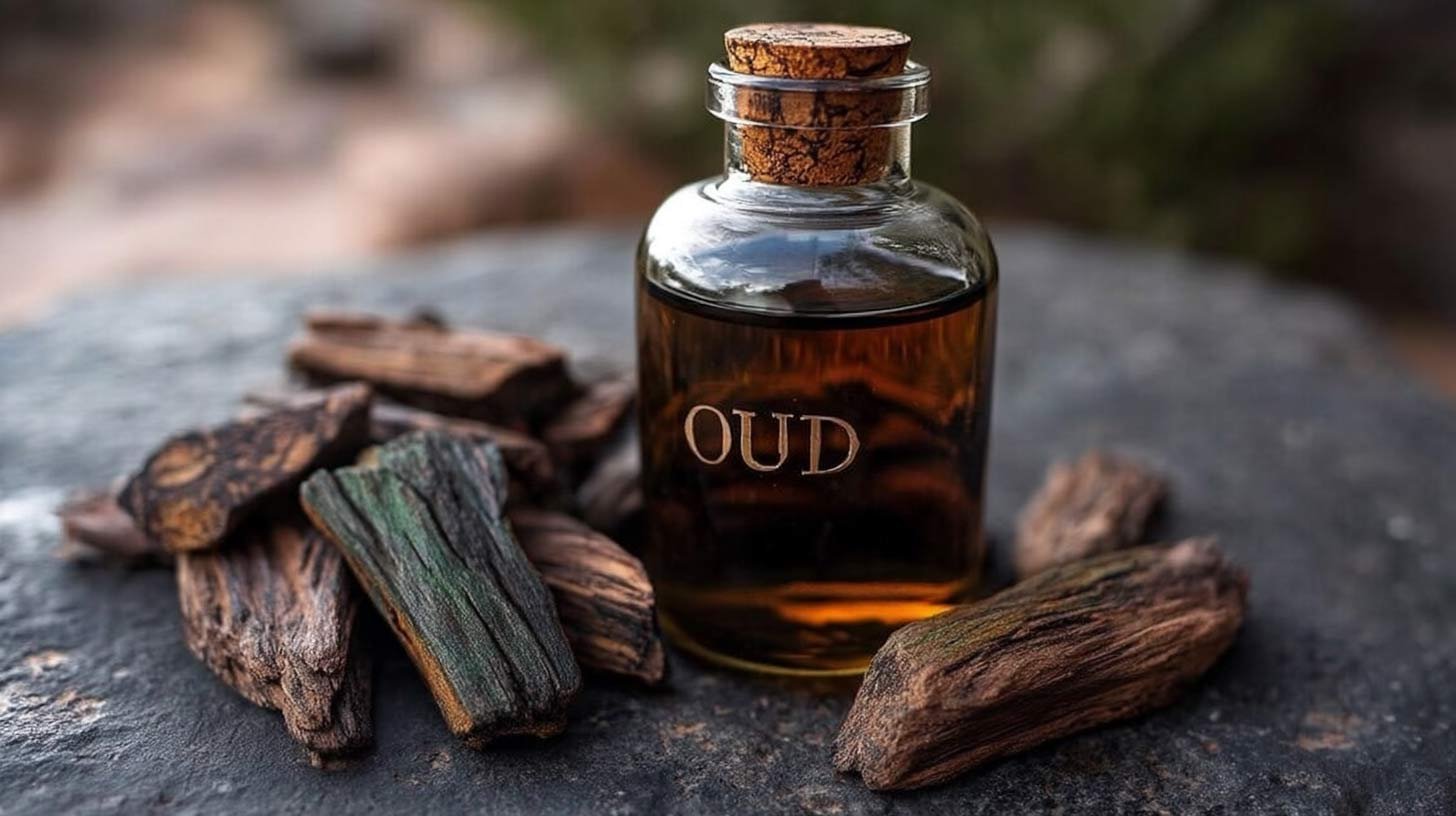
From a Tree's Defense Response to a Bottle of Oil
Everything starts with the resin itself, the aromatic compound mixture an Aquilaria or Gyrinops tree produces in response to wounding and fungal infection, covered in detail in our guide to how agarwood resin forms. Only resin-bearing wood is useful for oil production, plain, uninfected wood (sometimes called whitewood) carries little to no fragrance and isn't worth distilling.
Harvesting and Sorting the Wood
Once harvested, agarwood is broken down into smaller chips or shavings, and sorted by resin content, since this is what determines both grade and how much oil the batch can realistically yield. Lower-resin material is often set aside for incense use, where light heating is enough to release fragrance, while higher-resin chips are reserved for oil distillation, where the goal is to pull as much aromatic compound out of the wood as possible.
Distillation, in Brief
Distillers extract the oil using heat and, in most cases, water or steam. Chips are typically soaked for an extended period beforehand, commonly cited at one to two weeks though this varies considerably by distiller, then boiled or steamed for hours. The resulting vapor carries the wood's aromatic compounds with it; once cooled, that vapor condenses back into liquid, an oily layer and a watery layer (the hydrosol), which separate naturally.
Want the technical detail on hydro-distillation, steam distillation, and CO2 extraction?
Understanding Oud Oil Distillation MethodsSeparating Oil from Water
Because oud oil is less dense than water and doesn't mix with it, the two layers separate on their own once the condensed liquid is left to settle, oil rises to the top, water (carrying its own faint aroma, often kept and sold separately as hydrosol) sinks below. Distillers skim or draw off the oil layer carefully, since even a small amount of residual water can affect the oil's stability and shelf life.
What Happens to Oud Oil After Distillation
Freshly distilled oud oil is rarely the finished product. Distillers and sellers commonly describe a noticeable difference between oil tested immediately after distillation and the same oil several years later: young oil is often described as sharp, pungent, or carrying strong "barnyard" or animalic top notes, while oil that's had time to rest is described as smoother, deeper, and more rounded, with those harsher top notes settling into the background. This is generally attributed to slow chemical processes, including oxidation, esterification, and polymerization, that continue to act on the oil's compounds well after distillation ends.
Much of this initial transformation is reportedly concentrated in roughly the first two to five years, though sellers and collectors of aged oud sometimes describe ouds many years or even decades old as still slowly evolving. Over that same period, the oil's color is often reported to deepen toward a darker amber or near-black, and its texture to thicken slightly, alongside the change in scent. None of this means older is automatically better in every case, starting quality, storage conditions, and a buyer's own preference all factor in, but it does explain why age is treated as a meaningful variable in oud oil pricing and collecting, not just a marketing detail.
Why So Little Oil Comes Out the Other End
Even a large batch of resin-rich wood typically yields a surprisingly small volume of oil; figures reported across the trade vary enormously depending on starting resin content, covered in more depth in our guide to why oud oil prices vary so much. This low yield, combined with the labor and time involved in soaking, distilling, and separating, is the main reason genuine oud oil commands such a high price relative to its volume.