
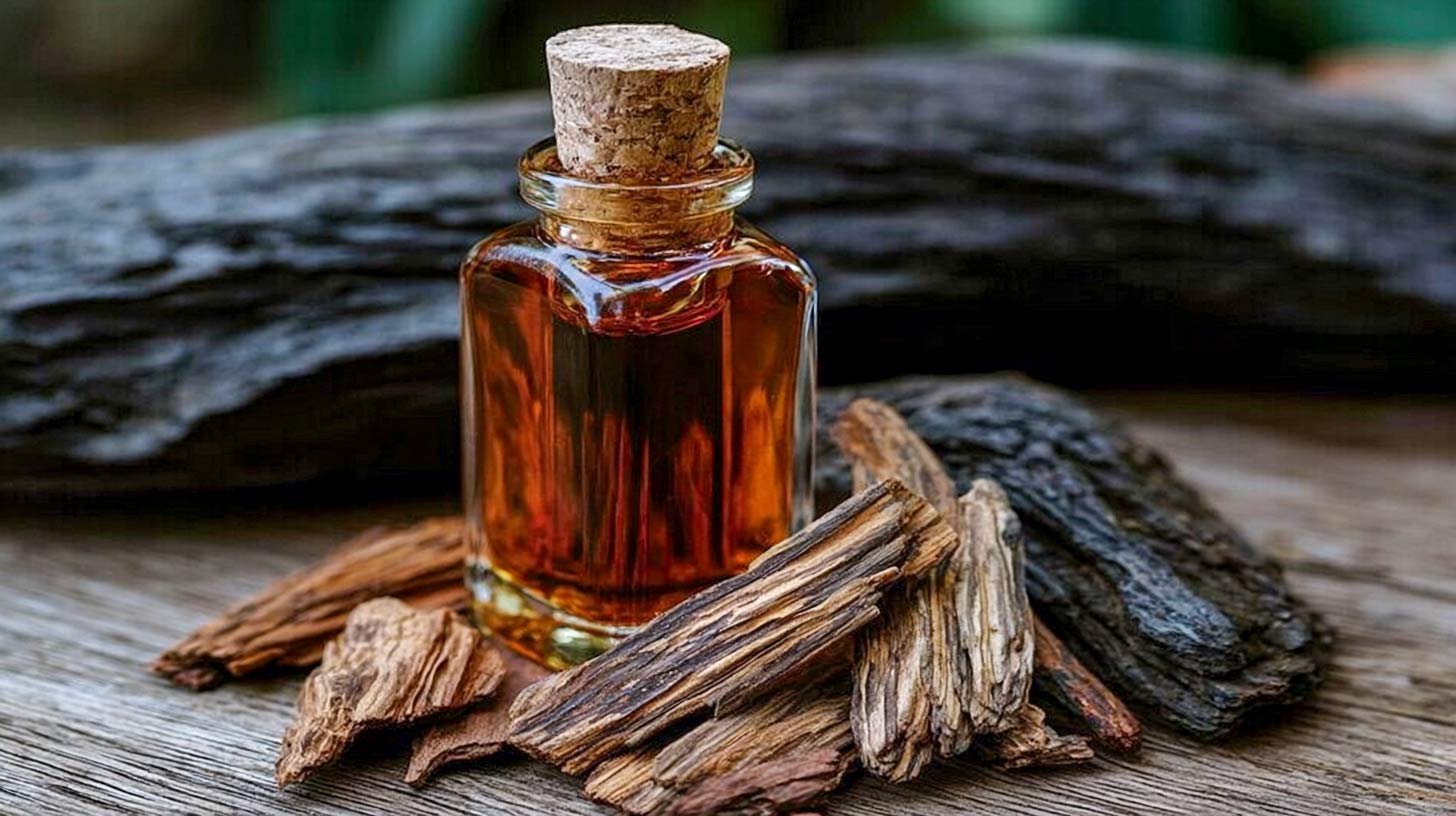
Agarwood chips and oud oil come from the same resin-bearing wood, but once you're deciding what to actually buy, they function as two different products. One is burned and experienced as ambient incense; the other is distilled, concentrated, and worn or applied directly. Neither is the "real" version and the other a substitute, they're different ways of experiencing the same underlying material.
Same Source, Different Products
Agarwood chips are pieces of resin-bearing wood, cleaned and sometimes graded, that release fragrance when gently heated, the method covered in our guide to how to burn agarwood chips. Oud oil is what's left after that same kind of wood is soaked and distilled, covered in our guide to how oud oil is made, a concentrated liquid that captures the wood's aromatic compounds in a form meant for direct skin application or perfumery use rather than burning.
How the Scent Experience Differs
Burning a chip produces a scent that fills a room, evolves over the course of a session as the chip heats, and fades once you stop. It's a shared, ambient experience, more like lighting a candle than applying a perfume. Oud oil, worn on skin, behaves more like a traditional fragrance: it develops over hours in close proximity to the wearer, shaped by body chemistry, and is generally a more personal, individual experience than a room scent.
Cost: Upfront Price vs Cost Per Use
Chips and oil sit in roughly overlapping price ranges per kilogram or per gram depending on grade, with high-quality oud oil commonly cited well into four or five figures per kilogram, covered in detail in our guide to why oud oil prices vary so much. The more useful comparison for a buyer isn't the headline price, it's cost per use. A burning session might use one or two small chips; an oil application might use a single drop. Both can be made to last a long time with modest quantities, so upfront sticker price matters less than how the unit cost breaks down over actual use.
Want the breakdown of what actually drives that headline price?
Why Oud Oil Prices Vary So MuchEquipment, Portability, and Convenience
Chips require a heat source, a censer or burner, and a few minutes of setup each time, which makes them better suited to a fixed space rather than travel. Oud oil needs none of that: a small bottle, a touch of oil on a pulse point, and you're done, which is why oil is generally the more practical choice for travel or for anyone who wants a quick, low-effort application. The tradeoff is that oil requires more careful storage and handling to preserve its quality over time, covered in our guide to how to store agarwood properly.
Which One Is Easier to Verify
Chips have a practical advantage here: a piece of wood can be visually inspected, weighed, and tested using the home methods covered in our authenticity testing guide. Oil is harder to verify without lab equipment, since synthetic oud and natural oud can look and even smell similar to an untrained nose, a distinction covered in our synthetic vs natural oud oil guide. If verifying authenticity yourself matters to you as a beginner, chips give you more to work with.
A Simple Way to Decide
If you want a shared, ambient scent experience for a room, enjoy a bit of ritual in the process, and want a form you can test yourself, chips are usually the better starting point. If you want a personal, wearable fragrance, travel often, or simply prefer a low-effort daily application, oil fits better, provided you're buying from a seller you trust, since verifying it yourself is harder. Many enthusiasts eventually own both, since they serve genuinely different purposes rather than competing for the same use case.