
Resin content, covered in our guide to resin content, sets the ceiling for how much aromatic material a piece of agarwood can yield. What method is used to actually pull that resin out of the wood, and how it's handled along the way, determines a great deal about the character of the final oil. Three extraction methods dominate the trade today, and they don't produce interchangeable results from the same starting wood.
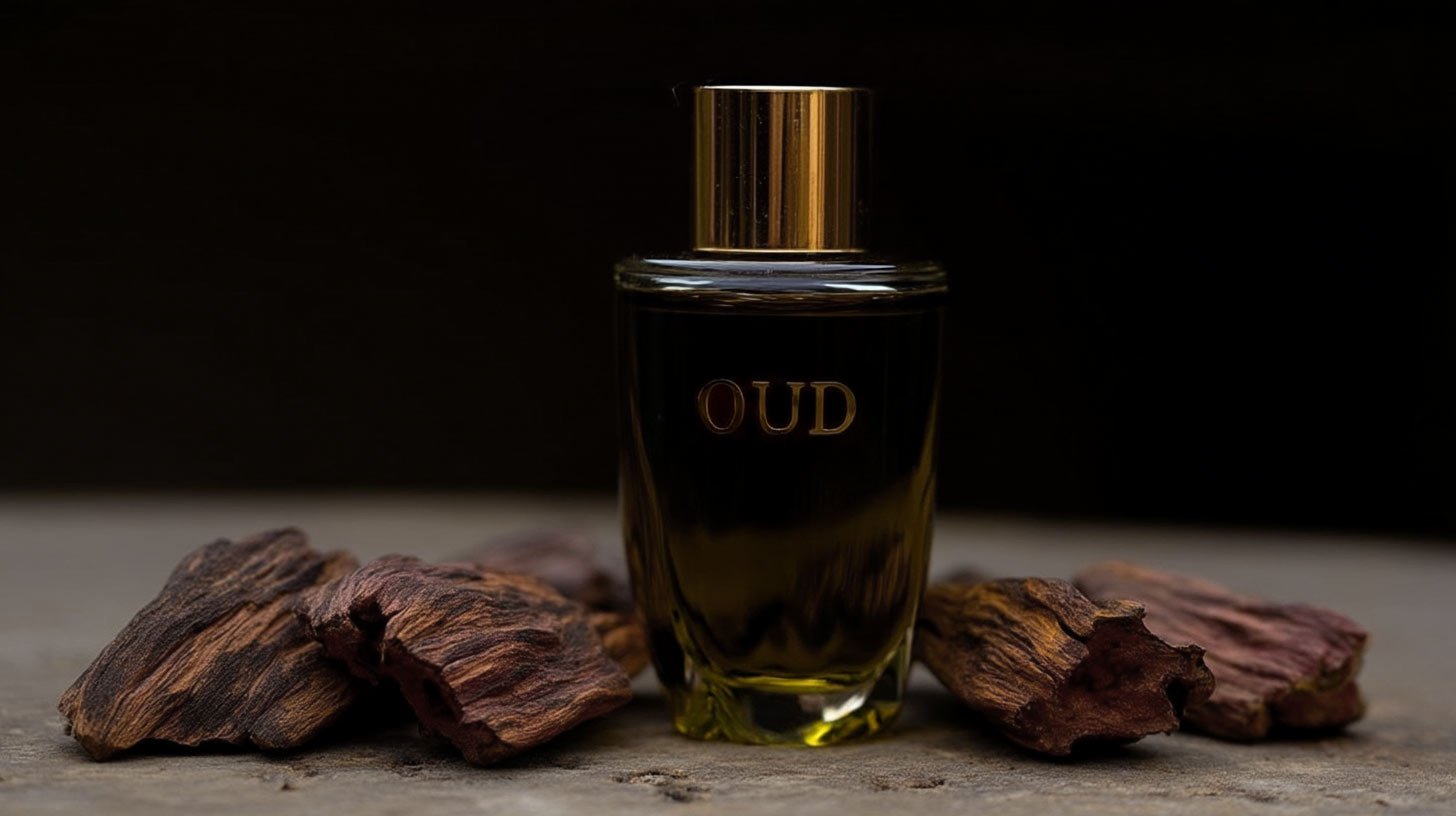
Three Methods, One Starting Material
Oud oil extraction today is generally done through one of three methods: hydro-distillation, steam distillation, and supercritical CO2 extraction. All three start from the same basic material, resin-bearing agarwood chips or wood, but each applies a different combination of heat, moisture, and solvent to separate the aromatic oil from the wood structure, and each produces oil with a somewhat different chemical makeup as a result.
Hydro-Distillation: The Traditional Method
Hydro-distillation is the most traditional and widely used method, particularly across India, Cambodia, and Thailand. Agarwood chips are fully submerged in water inside a still, forming what distillers sometimes call a "soup," and the still is brought to a boil. Before boiling even begins, the wood is commonly pre-soaked in water for an extended period, commonly cited in the range of seven to fifteen days, though soaking periods as short as a few days or as long as a month are also reported, to soften the resin and make it easier to release under heat. The boiling and distillation phase itself typically runs another six to twelve hours per batch. The resulting oil floats to the top of the leftover aromatic water, known as the hydrosol, and is skimmed or separated off.
Steam Distillation: A Regional Variant
Steam distillation works on a related principle but changes how heat and moisture reach the wood: rather than fully submerging the wood in boiling water, steam is passed through it directly. This method is more commonly associated with Indonesian production, while hydro-distillation remains more common in India, Cambodia, and Thailand. The difference in how moisture and heat contact the wood during steam distillation versus full submersion contributes to differences in the resulting oil's character, alongside all the other sourcing and species variables covered elsewhere in this hub.
Want to know what's actually happening to the wood's resin chemistry during extraction?
How Agarwood Resin FormsSupercritical CO2 Extraction: The Modern Alternative
Supercritical CO2 extraction is a more recent addition to the trade, using pressurized carbon dioxide held at a point between gas and liquid as the extraction medium instead of water or steam. Because it can operate at lower temperatures than traditional boiling-based methods, it avoids prolonged exposure to high heat that can degrade some of the more delicate aroma compounds. Studies comparing the methods have found CO2 extraction yields significantly more oil by volume, in some comparisons more than double the yield of traditional water distillation, largely because it pulls out a broader range of compounds, including heavier, non-aromatic ones alongside the aroma-active molecules.
Higher yield doesn't automatically mean a more desirable result, though. At least one study comparing extraction methods found that hydro-distillation captured a higher count of distinct, recognized quality aroma compounds than a comparable solvent-based extraction, suggesting that yield and aromatic complexity don't necessarily move together. The choice between methods involves a genuine tradeoff between efficiency and the specific aromatic profile a distiller is after, not a simple hierarchy of one method being categorically better than another.
Why Soaking Time Changes the Final Oil
Within hydro-distillation specifically, the pre-boil soaking period is one of the more significant variables a distiller controls deliberately. Prolonged contact with water before and during distillation is described by experienced distillers as having a substantial effect on the oil's eventual character, and soaking duration is adjusted intentionally to push the final scent in a particular direction. This is one of the more concrete, non-mystical explanations for why two oils distilled from comparable starting wood, by two different houses, can smell meaningfully different: the wood didn't just come from a different place, it spent a different amount of time in water before anything else happened to it.
How This Connects to "Fraction" Claims
Because a single hydro-distillation run can stretch across many hours, oil collected earlier in the run can differ somewhat from oil collected later in the same batch, which is the genuine basis behind "fraction" terminology sometimes used in retail listings. Whether a specific "first fraction" or "second fraction" claim reflects a meaningfully distinct, carefully tracked separation, or simply a label applied loosely to oil drawn in sequence, varies by seller. As covered in our guide to Middle Eastern oud grading standards, this kind of language is worth treating as a descriptive trade term rather than a guaranteed, standardized designation.